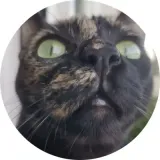


Our pets are far more than just furry flatmates. They are fully fledged members of our families, sharing our joys, our sorrows and our daily lives. But have you ever noticed how sensitive to our moods they seem to be? This is no coincidence. There is a deep bond between our emotional states and those of our four-legged companions, a bond worth exploring and understanding to improve our relationship with them and their well-being.
The evolution of the Human-Dog-Cat relationship
Humans have lived alongside cats and dogs for thousands of years. For dogs, this relationship began around 32,000 years ago with the domestication of the wolf, the ancestor of the modern dog. Dogs were first used for hunting and protection. The domestication of cats is more recent, dating back about 9,500 years. Archaeological finds in Cyprus revealed a cat deliberately buried with a human, suggesting a relationship already established at that time. Cats were initially drawn to farming villages by the rodents in the grain stores, and humans gradually encouraged their presence to protect their crops. Over time, these utilitarian relationships turned into deep emotional bonds. Today, dogs and cats are an integral part of our homes and families, and have developed an extraordinary ability to read and respond to our emotions, often better than we read theirs.
Interspecies emotional communication
Our animals are real emotional sponges, able to pick up on and sometimes even absorb our emotions. This ability, far from trivial, has allowed them to adapt to our human world over the centuries, and plays a crucial role in their daily behaviour, as well as in the quality of our relationship with them.
- Stress and anxiety: When we are stressed or anxious, our animals feel it. A study published in Scientific Reports showed that dogs’ cortisol levels (the stress hormone) were synchronised with those of their human companion. A dog may become restless; a cat may hide more often. These behaviours are not coincidences but direct reactions to our emotional state.
- Joy and serenity: Conversely, when we are relaxed and happy, our companions tend to be calmer and more playful. A serene owner will more often have a balanced, confident animal. This positive emotional synchronisation strengthens the bond between human and animal, creating a virtuous circle of shared well-being.
Hormonal impact: an invisible but powerful connection
Our bodies constantly produce hormones that influence our mood. These molecules also have an impact on our animals, creating a fascinating biochemical connection between us and our companions.
- Oxytocin, the attachment hormone: Also known as the “love hormone”, it plays a crucial role in strengthening the bond between humans and their companions. A study published in Science revealed that when humans stroke their dogs, oxytocin levels rise in both. This mutual increase strengthens our emotional connection and contributes to the feeling of shared well-being.
- Cortisol, the stress hormone: When we are stressed, our body releases cortisol. Our animals can detect this hormone, which may in turn make them anxious or restless. This detection is especially fine-tuned in dogs, which can even smell subtle stress-related changes in our body odour. It is important to understand that, although our companions perceive our stress, they do not necessarily understand its cause. This uncertainty can amplify their own anxiety and potentially trigger or worsen problem behaviours. For example, a cat or a dog might become more reactive simply in response to our emotional state, without understanding the real source of our stress. This chain reaction highlights the importance of managing our own stress for our companions’ well-being.
- Puberty and pregnancy hormones: Studies have shown that dogs can detect the hormonal changes linked to puberty in teenagers, which can change relationships. Likewise, many accounts and observations suggest that pets can sense a pregnancy, sometimes even before the mother-to-be knows, thanks to their ability to detect subtle hormonal changes.
Self-awareness for our companions’ well-being
Understanding this emotional connection invites us to greater self-awareness. By taking care of our own emotional well-being, we contribute directly to that of our companions. This awareness can lead us to adopt practices that benefit every member of the household, human and animal alike.
- Beneficial activities: Meditation, positive visualisation, physical activity, enjoying nature, personal development, or simply quiet moments can have a positive impact not only on us but also on our animals. A study published in the Journal of Veterinary Behavior showed that dogs whose human companions meditated regularly had lower stress levels.
- Non-verbal communication: Our animals are experts in body language. Studies have shown that cats and dogs can recognise our facial expressions. A cat that sees their human frowning and looking angry will choose to avoid that person, but will seek more contact if their human is smiling and relaxed. This ability to read emotions underlines the importance of being aware of our own body language when we interact with our animals.
Towards a more harmonious relationship
By recognising the influence of our emotions on our companions, not as the only factor to consider but as one among several, we can work to create a calmer, more balanced environment for the whole family. Here are a few ideas to get there:
- Shared activities: Doing activities together, such as games, walks or cuddle sessions, can strengthen your bond while soothing your respective emotional states. What’s more, these moments of connection boost oxytocin production, strengthening the emotional bond between you and your animal.
- Stress management: Learning to manage our own stress can have a direct positive impact on our animals. Deep breathing techniques, meditation or sometimes even therapy with a professional can help us stay calm in stressful situations, which in turn will help our animals stay at ease.
- Enriched environment: Creating a stimulating, secure environment for our animals can help them cope better with stress and negative emotions. This can include interactive toys, comfortable resting places and safe opportunities to explore.
- Routine and stability: Setting up stable routines, as far as possible, can help reduce stress, both for us and for our companions. Animals, especially dogs and cats, appreciate predictability. Regular times for meals, walks and play can contribute to a sense of security and well-being.
I’d like to illustrate this with two real examples. Take the case of Lisa and her dog Simba, which shows how human emotions can in part influence an animal’s behaviour. Lisa discovered that her own fears and guilt were affecting Simba, making her dog anxious when she was away. After working on her emotions and adapting Simba’s environment, she was able to go out without fearing she would come home to a stressed companion (which showed as destruction and agitation in the case of Simba, who followed Lisa everywhere). Similarly, Hélène noticed that her cat Tigrou, who used to hide out of fear of visitors, began to open up to guests after she became aware of her own social anxiety and saw a professional to help her manage her fears. Of course, she also put other strategies in place alongside this to calm Tigrou, such as safe spaces and an enriched environment, and accepted that Tigrou’s past and his experiences before her were also a factor influencing his behaviour.
The reasons behind behaviour are multifactorial, and sometimes one of these factors may be linked to our human emotions. These examples show how this awareness can improve our companions’ well-being, alongside adjustments made specifically for them, of course.
If you would like to explore this subject further and understand how a professional can help you along the way, I invite you to read my article Why consult an animal behaviourist? There you will find out how a specialist in the human-animal relationship can guide you to better understand and improve your emotional connection with your pet.
Our emotional well-being and that of our animals are closely linked. This deep connection reminds us that taking care of ourselves is also a way of taking care of our furry companions. By nurturing our own emotional balance and paying attention to our animals’ needs, we can create a harmonious home where humans, cats and dogs thrive together. This awareness invites us to take a more holistic approach to well-being, where the emotional health of every member of the family (whether on two legs or four) is valued and cared for.
Do you have questions about the connection between you and your pet? Need advice on improving your mutual well-being?
Feel free to contact me, and together we will explore ways to strengthen your bond and bring harmony to your relationship!
Sources
- NOVA. (2020). Cat Tales [Documentary]. PBS.
- Servais, V. (2016). “La relation homme-animal. La relation à l’animal peut-elle devenir significative, donc thérapeutique, dans le traitement des maladies psychiques ?”. Enfances & Psy, 69(1).
- Grandgeorge, M., & Hausberger, M. (2011). “Human-animal relationships: from daily life to animal-assisted therapies”. Annali dell’Istituto superiore di sanità, 47.
- Lestel, D. (2007). “Les origines animales de la culture”. Flammarion.
- Cyrulnik, B. (2018). “La naissance du sens”. Hachette Pluriel.
- Kreutzer, M., & Vauclair, J. (2004). “La cognition animale au carrefour de l’éthologie et de la psychologie”. Psychologie française, 49(2).

It all starts with getting to know each other.